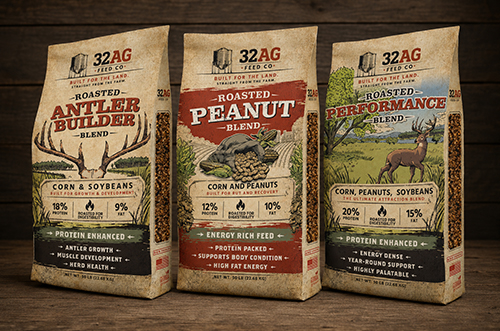
Corn has long been one of the most popular feed ingredients used by hunters, landowners, and wildlife managers. It’s readily available, highly attractive to deer and other wildlife, and serves as an effective energy source. However, not all corn is processed the same way.
One question we often hear is: What’s the difference between roasted corn and raw corn?
While both have their place, understanding how each is processed can help you make a more informed decision when selecting feed for your property.
Understanding Raw Corn
Raw corn is exactly what it sounds like—corn that has been harvested, dried, and packaged with minimal processing.
Because it’s widely available and often less expensive, raw corn is commonly used for supplemental feeding programs. It provides a valuable source of carbohydrates and energy, particularly during periods of increased nutritional demand.
Benefits of raw corn include:
- Affordable and readily available
- Highly attractive to wildlife
- Effective source of energy
- Easy to store and distribute
However, because raw corn remains relatively unchanged from harvest, some nutrients may be more difficult for wildlife to fully utilize compared to processed alternatives.
What Is Roasted Corn?
Roasted corn undergoes a controlled heating process designed to improve the feed’s characteristics before it reaches the feeder.
The roasting process can help:
- Enhance aroma and flavor
- Improve palatability
- Increase digestibility
- Reduce excess moisture
- Improve consistency and quality
The result is a feed product that many wildlife species readily consume and may utilize more efficiently.
Why Digestibility Matters
When discussing wildlife nutrition, it’s important to remember that consumption and utilization are not the same thing.
An animal can consume a feed product, but if its digestive system cannot efficiently access and process the available nutrients, the overall nutritional value may be reduced.
Roasting helps break down certain components within the grain structure, making nutrients more accessible during digestion. This can improve how effectively wildlife utilizes the feed they consume.
For landowners investing in supplemental feeding programs, improved feed utilization can be an important consideration.
Palatability and Attraction
One of the most noticeable differences between roasted and raw corn is the aroma.
The roasting process creates a distinctive smell that many wildlife species find highly attractive. This enhanced aroma can encourage feed consumption and help establish consistent feeding patterns.
While attraction should never be the sole focus of a feeding program, increased palatability can help ensure wildlife are regularly consuming the nutritional resources being provided.
Moisture and Feed Quality
Moisture can impact feed quality, storage life, and overall consistency.
Because roasted corn undergoes a heating process, it often contains lower moisture levels than untreated alternatives. This can help improve storage conditions and reduce some of the challenges associated with excess moisture.
Proper storage remains important regardless of feed type, but reduced moisture content can be an added benefit for landowners managing feed inventory throughout the year.
Which Option Is Right for Your Property?
The answer depends on your goals.
If your primary objective is providing a simple energy source at the lowest possible cost, raw corn may be a practical solution.
If you’re looking for a premium feed option that offers enhanced palatability, improved digestibility, and a consistent feeding experience, roasted corn may provide additional benefits.
Many wildlife managers choose roasted feed products because they want to maximize the value of their feeding investment while supporting a long-term nutrition strategy.
Supplemental Feeding Is About More Than Corn
Whether you choose roasted corn, raw corn, or a specialized feed blend, successful wildlife management requires a comprehensive approach.
Quality nutrition works best when combined with:
- Healthy habitat
- Reliable water sources
- Food plots
- Proper population management
- Consistent feeding practices
Together, these elements create an environment where wildlife can thrive throughout the year.
The Bottom Line
Both roasted corn and raw corn can play a role in a supplemental feeding program, but they are not identical products.
Roasted corn offers advantages in palatability, digestibility, and feed quality that may help wildlife make better use of available nutrition. For landowners focused on long-term wildlife management, those benefits can make a meaningful difference over time.
At 32AG, we’re committed to providing high-quality feed products and educational resources that help landowners, hunters, and wildlife managers make informed decisions for their property and feeding programs.